:
:

The Ultimate 5-Step Herbal Skincare Routine for Glowing Skin
Let’s get one thing straight: you don’t need a 12-step, chemical-laden process to get incredible skin. I’ve spent over 15 years in the beauty industry, and if there’s one truth I’ve seen proven time and again, it’s that more products don’t equal better results. Often, it’s the opposite. That angry, inflamed skin you’re fighting? It might just be begging for a simpler, gentler touch. The secret to that sought-after radiance isn’t found in a dozen different bottles of synthetic actives; it’s about consistency and choosing the right plant-powered allies. Building a solid skincare routine for glowing skin is about working with your skin, not against it, using the potent intelligence of nature.
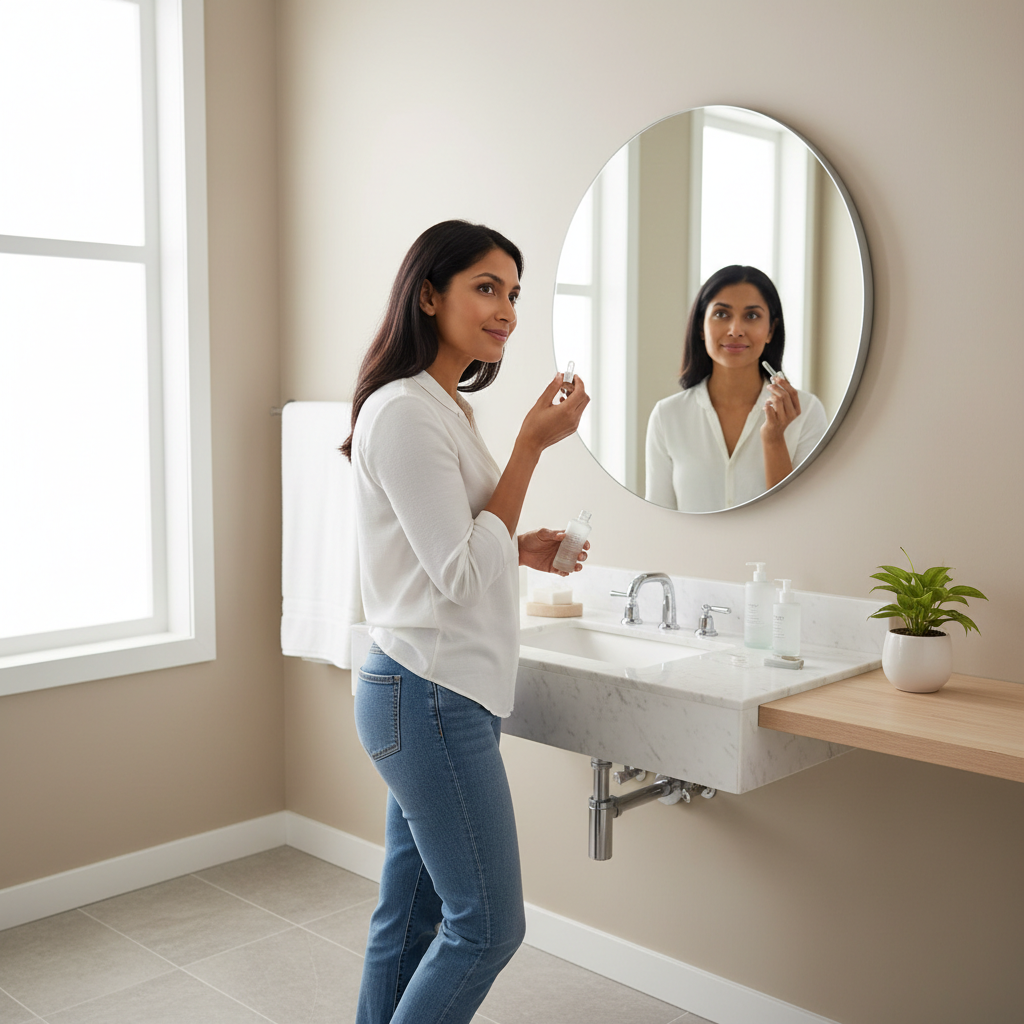
First, Let’s Ditch the Myths: What Your Skin Actually Needs
Before you even think about products, we need to reframe the goal. “Glowing skin” has become a buzzword, but what does it really mean? It means healthy skin. It’s skin that is balanced, hydrated, and strong enough to protect itself. It’s not about being stripped, squeaky clean, or aggressively exfoliated into submission.
The philosophy behind using natural skincare ingredients is simple: work in harmony with your body’s largest organ. Plants have developed complex phytochemicals over millennia to protect and repair themselves. When we harness these compounds in herbal beauty products, we’re giving our skin tools it intuitively knows how to use. Think of it as providing the building blocks for a resilient skin barrier, rather than constantly demolishing and rebuilding it with harsh chemicals.
The 5 Foundational Steps of a Herbal Skincare Routine for Glowing Skin
This is the core framework. It’s effective, it’s sustainable, and it focuses on nourishment over aggression. You can do this morning and night (with one small change), and it should take you no more than 5-7 minutes. Consistency is everything.
Step 1: The Gentle, Effective Cleanse
Your cleanser’s job is to remove dirt, makeup, and excess oil without stripping your skin’s natural moisture barrier. That tight, dry feeling after washing is a major red flag—it means your cleanser is too harsh.
In my experience, double cleansing in the evening is a game-changer, especially if you wear makeup or SPF. Start with an oil-based cleanser to dissolve oils, then follow with a gentle, water-based herbal wash. Look for ingredients like Neem for its antibacterial properties, Turmeric for its anti-inflammatory power, or gentle Manjistha to promote complexion clarity. For the morning, a single cleanse with the water-based wash is plenty. You can explore {{internal_link:our complete collection of herbal cleansers}} to find the perfect match for your skin’s needs.
Step 2: Tone & Balance with Floral Waters
Forget those stinging, alcohol-based toners from your teenage years. Their modern, herbal counterparts are called hydrosols or floral waters, and they are incredible for your skin. These are the aromatic waters left behind after steam-distilling plants, and they contain the plant’s water-soluble benefits in a very gentle form.
A spritz of pure Rosewater can calm redness and hydrate, while Witch Hazel (the alcohol-free kind!) can help refine pores for oily or combination skin. Lavender water is beautifully calming for sensitive or irritated skin. Their job is to add a first layer of hydration and balance your skin’s pH after cleansing, making it more receptive to the products that follow.
Step 3: Treat with Potent Plant-Based Serums
This is where you get specific. Serums are concentrated liquids designed to deliver a high dose of active ingredients directly to your skin. This is the step where you can really target your personal concerns, whether it’s dullness, fine lines, or hyperpigmentation.
Instead of synthetic Vitamin C, look for serums rich in Amla (Indian Gooseberry), which is one of the most potent natural sources of this brightening antioxidant. For a natural alternative to retinol, Bakuchiol is a plant-derived powerhouse that offers similar skin-refining benefits without the irritation. A few drops pressed gently into the skin is all you need. Give the serum a full minute to absorb before moving on.
Step 4: Moisturize & Deeply Hydrate
A moisturizer’s job is twofold: to hydrate the skin (add water) and to seal that hydration in (prevent it from evaporating). This is crucial for keeping your skin plump, soft, and glowing.
The right choice depends on your skin type. Drier skin types often love richer creams with ingredients like Shea Butter and Ashwagandha. Oiler skin types might prefer a lightweight lotion or even a pure facial oil like Jojoba, which cleverly mimics the skin’s natural sebum and helps to balance oil production. Don’t be afraid of oils! The right {{internal_link:natural facial oils can actually make your skin less greasy}}, not more.
Step 5: Protect with a Mineral Shield (A.M. Only)
I can’t say this forcefully enough: if you do nothing else, wear sunscreen. All your hard work will be undone by sun damage. It’s the number one cause of premature aging and hyperpigmentation.
For a natural approach, I always recommend a mineral-based sunscreen. These use Zinc Oxide and/or Titanium Dioxide to create a physical barrier that sits on top of your skin and reflects UV rays. They are generally better tolerated by sensitive skin than chemical sunscreens, which absorb UV rays and can sometimes cause irritation. This is the final, non-negotiable step of your morning skincare routine for glowing skin.
What I’ve Seen in Practice: A Case for Simplicity
I once worked with a client in her late 20s who was battling constant redness, sensitivity, and breakouts. She brought in a bag of products—literally, over 15 different items—that she was using in a complex morning and night rotation. It included multiple acids, a retinol, abrasive scrubs, and harsh cleansers.

Her skin wasn’t just breaking out; it was screaming for help. Her moisture barrier was completely compromised. We did a radical reset. We stripped her routine back to just three products for two weeks: a creamy cleanser, a calming rosewater toner, and a simple moisturizer with shea butter. Nothing else.
Within a month, the redness was down by 70%. The breakouts had calmed significantly. We then slowly reintroduced a single, targeted serum with Bakuchiol. The results were astounding. It proved what I’ve always believed: a healthy glow comes from nourishing and supporting your skin, not attacking it.
Beyond the Face: A Holistic Approach to Radiance
True radiance is an inside-out job. Your skin is a reflection of your overall well-being. While a great skincare routine is foundational, a few other habits can amplify your results.
- Weekly Boosts: Incorporate simple home remedies for glowing skin once a week. A mask made from honey (a natural humectant and antibacterial) and a pinch of Turmeric can brighten and calm the skin. A gentle scrub of ground oats and water can slough away dead cells without irritation.
- Nourish from Within: A diet rich in antioxidants, healthy fats, and water is non-negotiable for a healthy complexion.
- Extend the Care: The same principles apply elsewhere. A consistent hair care routine for hair growth, for example, relies on nourishing the scalp and strands with botanical ingredients. Herbs like Amla and Bhringraj, famous in Ayurveda, are just as beneficial for hair follicles as they are for skin cells. It’s all connected. You can learn more about {{internal_link:the power of Ayurvedic herbs}} in our wellness journal.
Frequently Asked Questions About Herbal Skincare
How long does it take for a natural skincare routine to show results?
Patience is key. While you might feel immediate hydration, visible changes like improved texture and reduced hyperpigmentation typically take 4-6 weeks. This is the length of your skin’s natural renewal cycle, so you need to be consistent to see the full benefits.
Can herbal beauty products cause breakouts?
Sometimes. When switching to a new routine, some people experience a temporary “purging” phase where underlying congestion comes to the surface. This usually subsides within 2-4 weeks. However, if you experience redness, itching, or persistent irritation, you might be sensitive to a specific ingredient and should stop using the product.
What’s the difference between “natural” and “organic”?
“Natural” means the ingredients are derived from nature, but it’s an unregulated term. “Certified Organic” is a regulated term meaning the ingredients were grown without synthetic pesticides or fertilizers. While organic is great, many high-quality, effective natural ingredients may not be certified for various reasons.
Can I use home remedies like lemon juice on my face?
I would strongly advise against it. While many home remedies for glowing skin are wonderful, some, like pure lemon juice or baking soda, are highly disruptive to your skin’s pH and can cause significant irritation and photosensitivity. Stick to gentle, proven remedies like honey, oats, and yogurt.
Is an herbal skincare routine expensive?
It doesn’t have to be. While some luxury brands are pricey, focusing on a few high-quality, multi-tasking products is often more affordable than buying a dozen mediocre ones. Investing in a good serum and moisturizer, for instance, will give you more bang for your buck than a cabinet full of trendy but ineffective products.
Building an effective skincare routine for glowing skin is a journey of discovery. It’s about tuning in to your skin’s needs and responding with the gentle, powerful support of nature. Ditch the complicated steps and harsh chemicals, and embrace the simplicity of a consistent, herbal-focused regimen. Your skin will thank you for it.
Ready to build your simple, effective ritual? Start by finding your perfect herbal match. Explore our curated collection of facial cleansers and potent serums at Aval Naturals, all designed to restore your skin’s natural, healthy glow.
From an SEO execution perspective, improving skincare routine for glowing skin is usually where we see the strongest compounding gains over 3-6 months.
From an SEO execution perspective, improving skincare routine for glowing skin is usually where we see the strongest compounding gains over 3-6 months.
From an SEO execution perspective, improving skincare routine for glowing skin is usually where we see the strongest compounding gains over 3-6 months.
Frequently Asked Questions
How long does it take for a natural skincare routine to show results?
Patience is key. While you might feel immediate hydration, visible changes like improved texture and reduced hyperpigmentation typically take 4-6 weeks. This is the length of your skin’s natural renewal cycle, so you need to be consistent to see the full benefits.
Can herbal beauty products cause breakouts?
Sometimes. When switching to a new routine, some people experience a temporary “purging” phase where underlying congestion comes to the surface. This usually subsides within 2-4 weeks. However, if you experience redness, itching, or persistent irritation, you might be sensitive to a specific ingredient and should stop using the product.
What’s the difference between “natural” and “organic”?
“Natural” means the ingredients are derived from nature, but it’s an unregulated term. “Certified Organic” is a regulated term meaning the ingredients were grown without synthetic pesticides or fertilizers. While organic is great, many high-quality, effective natural ingredients may not be certified for various reasons.
Can I use home remedies like lemon juice on my face?
I would strongly advise against it. While many home remedies for glowing skin are wonderful, some, like pure lemon juice or baking soda, are highly disruptive to your skin’s pH and can cause significant irritation and photosensitivity. Stick to gentle, proven remedies like honey, oats, and yogurt.
Is an herbal skincare routine expensive?
It doesn’t have to be. While some luxury brands are pricey, focusing on a few high-quality, multi-tasking products is often more affordable than buying a dozen mediocre ones. Investing in a good serum and moisturizer, for instance, will give you more bang for your buck than a cabinet full of trendy but ineffective products.